1. Workshop Overview
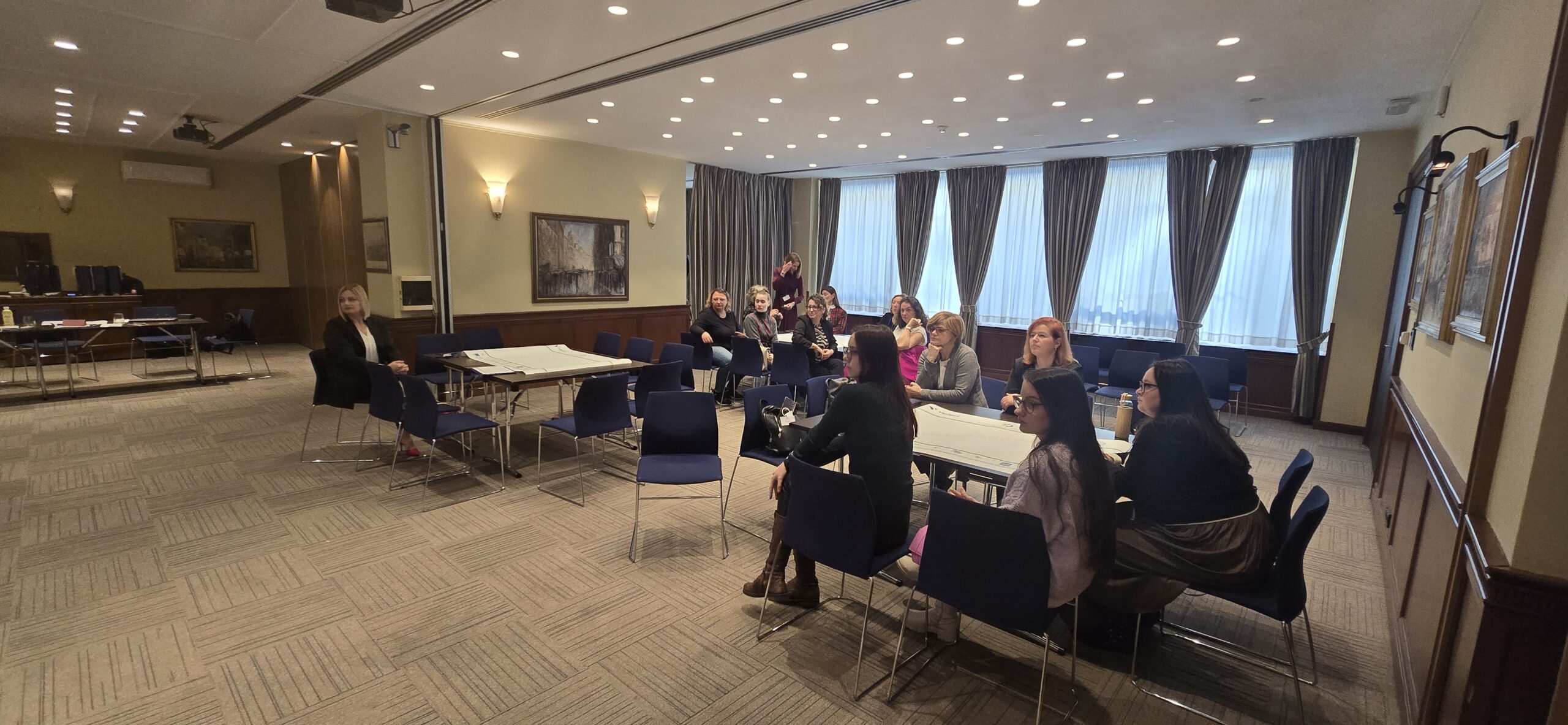
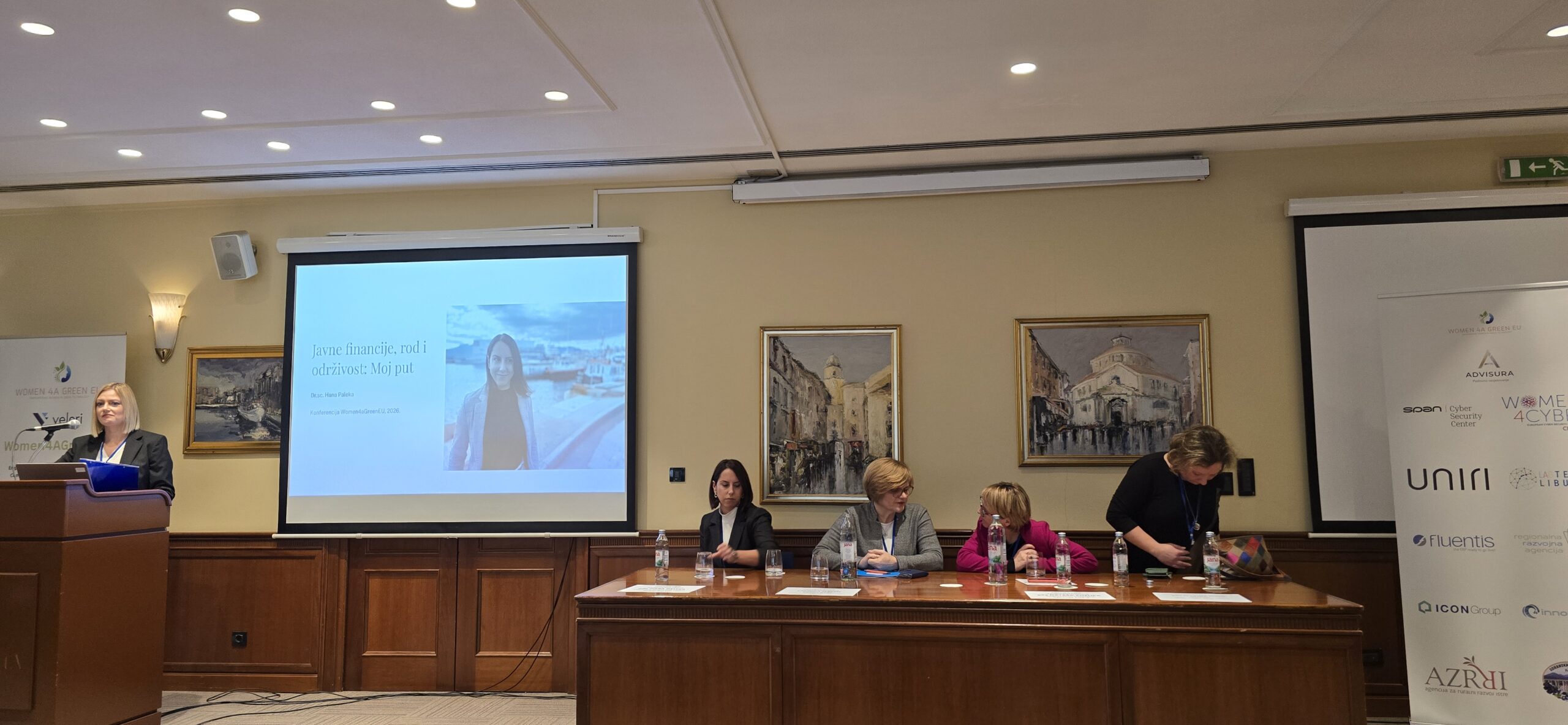
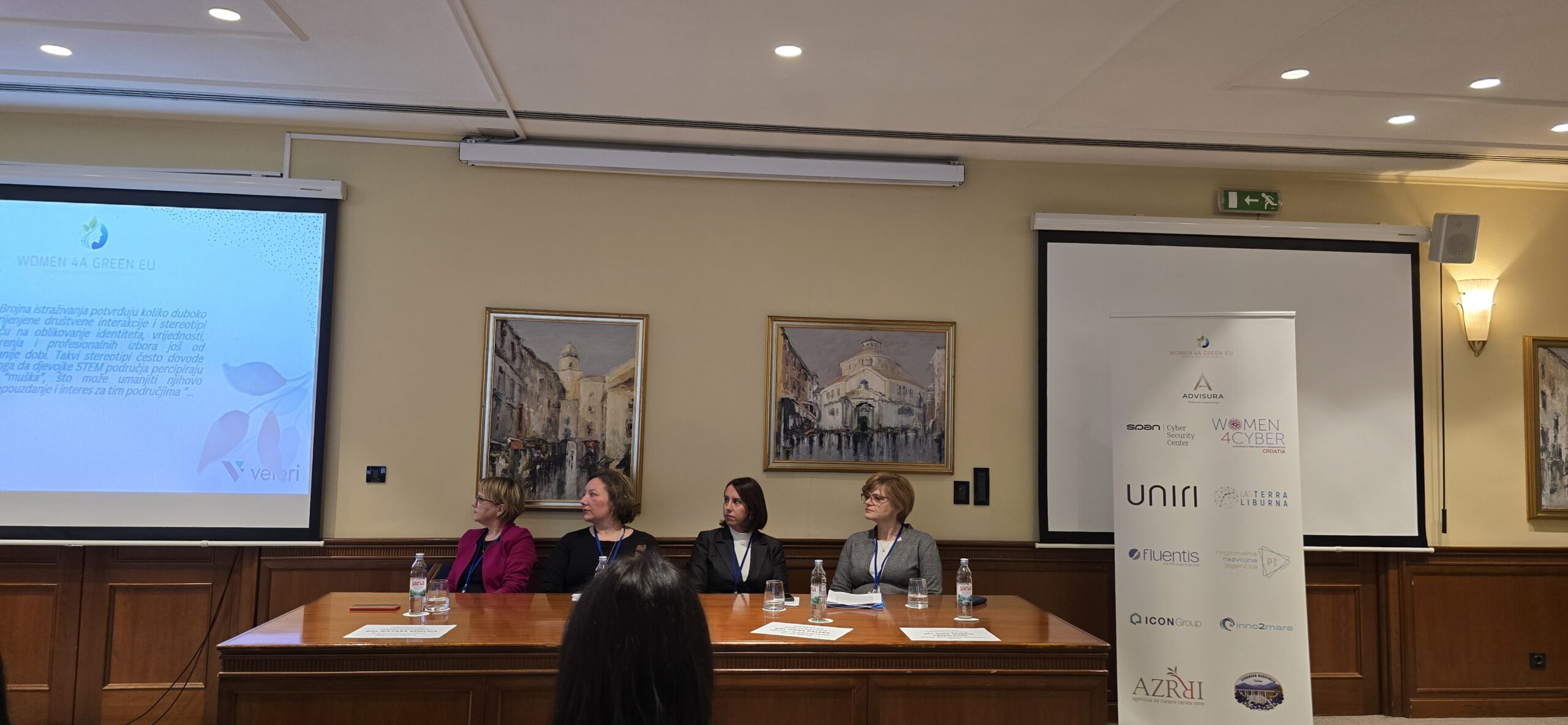
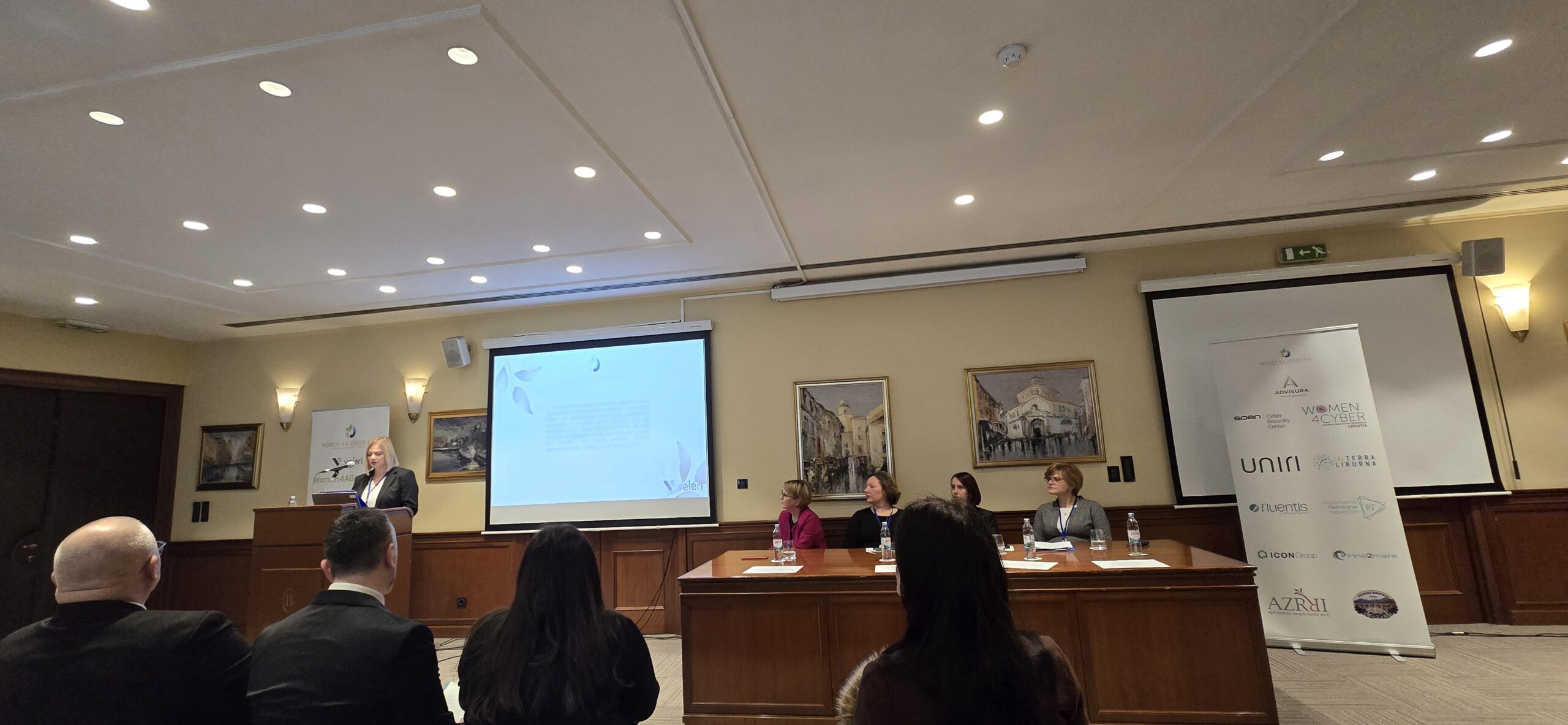
• Country: Republic of Croatia
• Date: 23/2/2026
• Venue: Grand Hotel Bonavia, Rijeka
• Organising Partner: Polytechnic of Rijeka
• Number of participants: 28
• Stakeholder groups represented: Entrepreneurs, Teachers, Students, Local authorities
2. Summary of Workshop Agenda
Provide a brief overview of the sessions, speakers, breakout discussions, and activities carried out.
3. Key Insights from Breakout Sessions
Breakout Session 1 – Barriers:
– Summary of major identified barriers
Traditional prejudices (division into male and female occupations)
Lack/invisibility of female role models
Insufficient guidance for girls and women
Limited availability of technology in rural areas
– Quotes or representative statements
Traditional values and gender stereotypes continue to create a dual responsibility for women and men, with women primarily focused on family and men on their careers. This highlights the issue of past service that is not valued, yet significantly contributes to women’s overall work efficiency.
Statistically and practically confirmed, there is a shortage of women in the profession, with transparency in employment and promotion being a major problem.
Primary education does not foster a culture of awareness among girls regarding career guidance. A small number of schools address this, but not as a standard practice – only as part of initiatives implemented within international projects.
Rural areas are particularly affected by a high level of ignorance of new technologies and a lack of financial resources to provide necessary training.
Breakout Session 2 – Opportunities and Solutions:
– Proposed solutions
EU strategy, policies and programs promoting green transition and gender equality
Scholarships in STEM and green technologies
Croatian Employment Service vouchers
Parental leave for men (continuance of good practice)
Men’s alliance/sponsorship
– Stakeholder perspectives
The implementation of EU strategies, policies, and programs promoting green technologies, STEM, and gender equality in these areas should be monitored both at the EU level and by individual Member States. The effectiveness of the programs must be measured regularly, and corrective measures should be taken as needed.
In addition to scholarships in STEM and green technologies, it is necessary to co-finance associations that provide education in primary and secondary schools so that all students have equal rights to education.
The expansion and establishment of new women’s alliances is encouraged, aiming to promote the visibility of women – entrepreneurs, scientists, and educators – who will strengthen the image of women in green technologies and STEM.
Continue the good practice of selecting the best female scientist in the fields of STEM and green technologies. Currently, the selection of female scientists takes place in the public sector, but the private sector is equally competitive in this regard and should also be promoted.
As someone who works on gender equality at management levels and has researched global opportunities and local studies, I can confirm that male alliance and sponsorship are essential and highly effective tools for achieving gender equality. This is not something that can simply be added to policies or recommendations; it requires a systematic approach, starting with awareness-raising from the earliest stages and continuing through the education system. It should also be integrated at the collective, company, and public sector levels through internal policies, where achieving gender equality is not seen as a struggle against male colleagues, but as the creation of equal opportunities for women with the support of male colleagues. (Project Ambassador)
– Prioritized recommendations
Gender equality from the earliest age
Education of educational staff
Widespread use of effectiveness measures of existing programs
Open communication and informing parents about educational opportunities
Increased education and promotion of green technologies
Investment and promotion programs for green solutions across all industries, including non-governmental organizations, civil society, and small and medium-sized enterprises, as well as the promotion of female entrepreneurship in green technologies (women have been shown to achieve a greater number of innovative solutions).
4. Policy Input for the EU-Level Blueprint
• National-level policy gaps identified:
Inconsistency between the curriculum in the entire educational vertical and the needs of the labor market
Insufficient public information
Inflexible job structure in green technologies and STEM
Too low fines for companies that do not respect the rules of gender equality in employment
Fabrication of gender equality in public administration bodies
Lack of tax measures that would support the employment of women
• Proposed policy measures:
Curricular reform
Increased public awareness through media, fairs and similar events
Part-time jobs for women in STEM and green technologies
Tax breaks for companies that support the employment of women in green technologies and STEM fields
Start-up incubators exclusively for women entrepreneurs in green technologies and STEM
• Relevance for EU-level policy harmonization:
The inclusion of relevant proposed measures in EU strategies and laws, which must be implemented in all EU member states, together with continuous monitoring and supervision of their implementation, would significantly contribute to improving the position of women in disputed areas. The problem with the implementation of EU policies is that they are often limited to directives and recommendations, rather than political measures with the force of law. As a result, many member states do not comply with EU recommendations.
• Suggestions for inclusion in the Policy Blueprint:
For a draft policy whose adoption by the EU could have positive effects, the following measures are recommended: curricular reform of the entire education system, with a strong emphasis on guiding girls towards green technologies and the STEM field (offering a wider range of free education at all ages); introduction of targeted scholarships for a greater number of young women (not only students, but also those undergoing retraining); improved evaluation of women’s past service (as many women on maternity leave work and continue their education, which is not properly recognized); and ensuring greater autonomy for EU bodies working on gender equality, including monitoring EU programs and gender equality measures (such as ad hoc on-site checks of public and private companies for compliance with gender equality measures).
5. Participation & Feedback Summary
Provide a short summary of participant feedback responses collected from the feedback forms.
Feedback forms were submitted by representatives of VET, HEIs, schools, authorities, non-governmental associations, entrepreneurs, and students. Respondents are satisfied with the clarity of the workshop, its relevance, proactive inclusion in debates, the quality of facilitators’ support, the usefulness of discussions on policy, and the general organization of the workshop (overall satisfaction is 90%).
Among the most important aspects identified in the workshop, the participants highlighted the following: the importance of eliminating all salary differences between male and female employees; the need to provide appropriate support to women in all areas, including professional development, motherhood, and similar aspects; the insistence on equal domains of authority for male and female managers; the promotion of women’s leadership as a tool for sustainability and community development; and a focus on education and the development of digital tools due to their relevance in the green transition.
Among the most promising policies, respondents identified: encouraging innovative projects for youth; investments in further training programs; continued co-financing and accessible educational content for all; programs that empower women; equal pay policies; work-life balance; part-time jobs for women in STEM and green technologies; integration of green technologies in business and public policies; introduction of green competencies in formal education and retraining programs; local initiatives and partnerships; offering a wider selection of free education for all ages; and grants through ERASMUS and other project financing methods.
Regarding the additional measures to be considered, the stakeholders mentioned the following: creating accessible retraining programs for women; investing in innovative projects that combine technical and soft skills; ensuring the availability of technology in rural areas; providing microfinancing and support for small initiatives; organizing sustainability training for small and medium-sized enterprises; engaging young men, male colleagues, and male leaders in the so-called male alliance, as this is crucial for achieving gender equality in all areas, especially in traditionally male-dominated fields; and raising public awareness through the media, fairs, and similar events.
6. Annexes
1. DISCUSSION GUIDE
To be given to facilitators and participants during breakout sessions
Breakout Session 1: Barriers
Objective:
Identify the main obstacles that prevent girls and women from entering and progressing in the green technology sector.
Guiding Questions
Structural Barriers
What institutional or systemic factors (education, labour market, policy) limit women’s access to green tech careers?
Several barriers limit women’s access to the green technology sector, including entrenched prejudices regarding the division between male and female professions, a lack of public female role models, insufficient guidance for girls and women within the education system, and limited availability of technology in rural areas. Employment policies on gender equality are only marginally implemented in the Republic of Croatia.
Are there gaps in national or EU policies that contribute to these barriers?
Most national policies derived from European policies and guidelines are implemented mainly as general strategies without the force of law. Public administration promotes gender equality to some extent, but only marginally in defining the ratio of men to women in politics and public authorities. The public is relatively poorly informed about supranational policies promoting gender equality, and this is considered part of the problem hindering a stronger presence of gender equality in the Republic of Croatia.
Educational & Skills Barriers
What prevents girls and women from choosing STEM / green skills training?
Girls are not sufficiently informed about employment opportunities in STEM and green technologies from an early age. There are no structured career guidance programmes at this stage. STEM workshops in some schools are organised by external organisations that charge for courses. In these circumstances, many girls and boys leave education. Furthermore, there is a lack of public role models and general awareness of the benefits of employment in STEM. Scholarships are available to female students, but in very limited numbers and amounts.
Are VET programmes accessible and inclusive?
Vocational training is offered in very limited quantities and is not sufficiently publicly promoted to attract more stakeholders. Therefore, better promotion and greater flexibility of the programme are necessary to include as many interested female participants as possible, as they are often unable to attend essential training regularly due to family obligations.
Cultural & Social Barriers
What stereotypes or expectations impact career choices?
Compared to neighbouring countries, the Republic of Croatia is not as drastically traditional regarding male and female professions. However, the proportion of women in green technologies and STEM is significantly lower than in professions such as education, medicine, and other service industries. There remains a noticeable culture of making deals outside working hours through business dinners and similar gatherings, in which women traditionally do not participate. In this context, the project participants consider it necessary to conduct business dealings within working hours and the physical boundaries of the company.
How do family, cultural norms, or workplace culture influence women’s participation?
Women have traditionally focused on family responsibilities and caring for the household and children. Unfortunately, especially in dynamic fields such as green technologies and STEM, where ongoing education and learning are essential, women often approach maternity leave with some apprehension. Although women continue to work and learn during maternity leave, their previous service is often undervalued and unappreciated. In terms of work culture, the prevailing view is that men’s opinions are given more weight than women. One participant emphasised the need to foster male alliances and raise awareness of the importance of teamwork, without dividing contributions into those of male and female colleagues.
Industry / Workplace Barriers
Recruitment? Promotion? Work-life balance?
The workshop participants believe that certain stereotypes exist regarding the hiring of female and male colleagues. As one possible solution, they suggest evaluating applications without revealing the applicant’s identity. In this way, committees can act more objectively and assess the applicant’s skills and competencies more accurately. Some progress has been noted regarding the balance between family and work life. For example, in the Republic of Croatia, an increasing number of men are taking parental leave so that their wives can return to work earlier. However, a large proportion of women in the Republic of Croatia achieve work-life balance only with great sacrifices.
Lack of role models or mentorship opportunities?
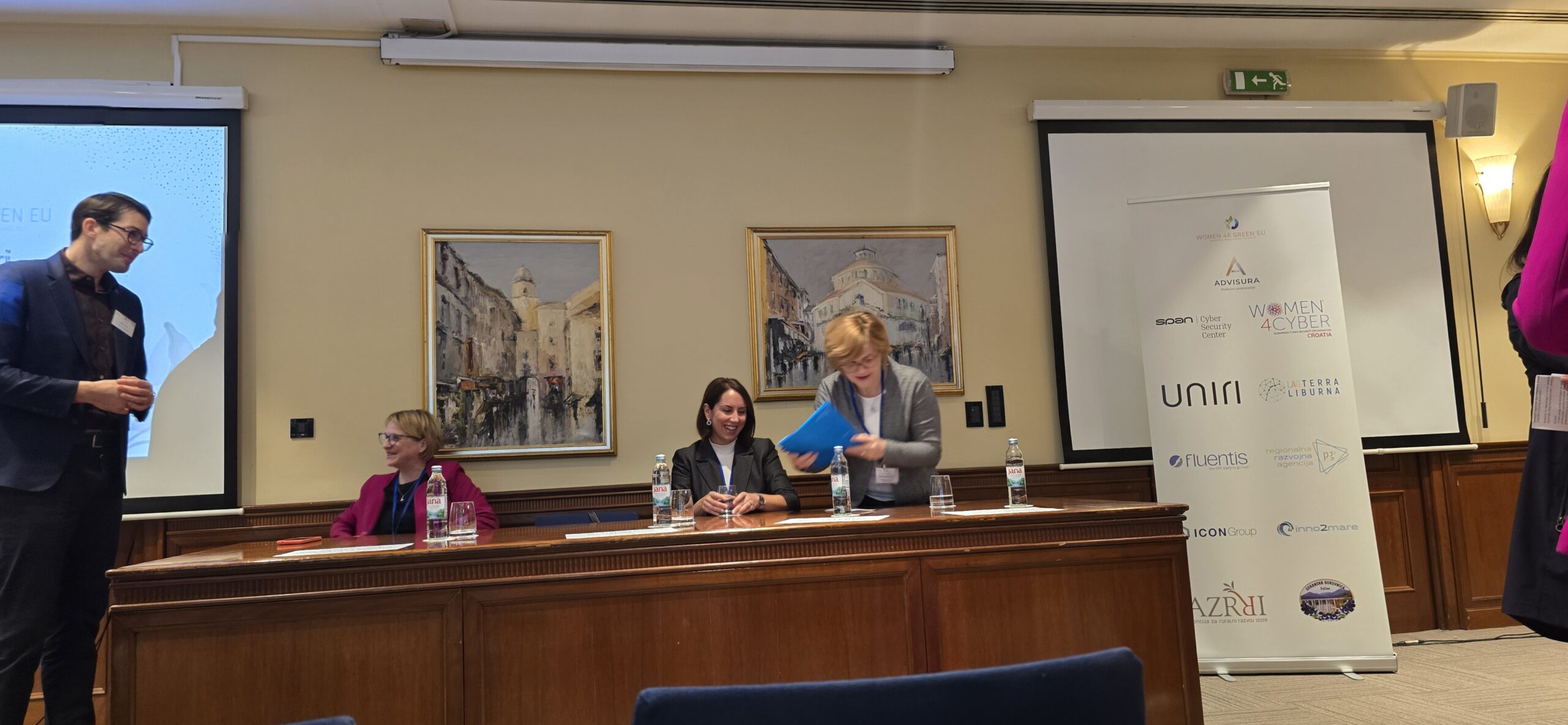
At the workshop, the moderator (Jakopič Ganić) asked the female students present if they could name a public role model from green technologies or STEM. There was no response. The situation is not significantly different among participants who already have work and life experience. Therefore, the project’s aim to promote female role models publicly is certainly welcome. During the workshop, a pattern of mentorship was already evident, with the project ambassador teaching the student how to present the working group’s conclusions clearly and confidently.
Which groups are MOST affected?
Young women
Women in career transitions
Women in rural areas
Migrant or disadvantaged groups
Breakout Session 2: Opportunities & Good Practices
Objective:
Identify opportunities, enablers, successful initiatives, and strengths that can support women in green tech.
Guiding Questions
Existing Opportunities
Are there national initiatives supporting women in STEM or green sectors?
The Republic of Croatia offers state scholarships in STEM and green technologies, although the public is not sufficiently informed about the possibilities of co-financing. Participants also mention vouchers from the Croatian Employment Service as a good example of promoting these professions, as well as parental leave for men. Annual elections for the best female entrepreneurs in these sectors are also held, although participants noted that the election for the best female engineer is conducted only in the public sector, while the private sector is not included. The election of the best female entrepreneur in green technologies should be more strongly promoted in rural areas, where there is a certain deficit in public education about the possibilities for local community development through green technologies.
Which companies, schools, or VET providers are already innovating?
In addition to scholarships in STEM and green technologies, it is necessary to co-finance associations that provide education in primary and secondary schools to ensure all students have equal access to education. The expansion and establishment of new women’s alliances are encouraged, aiming to promote the visibility of women – entrepreneurs, scientists, and educators – who will strengthen the image of women in green technologies and STEM. Existing associations, such as expert groups at the Ministry of Agriculture, Forestry and Fisheries, continue positive practices by holding workshops and training sessions throughout the Republic of Croatia, which significantly improves opportunities for female entrepreneurs working in green technologies.
Skills & Training Opportunities
New green qualifications or modules?
It is necessary to adjust the curricula of primary and secondary schools, as well as universities, so that they better guide girls and women towards green technologies through professional orientation and counselling. Women are generally more passionate about learning and innovative approaches to problem-solving and, in this sense, could significantly contribute to the development of green technologies and STEM sectors in the Republic of Croatia. For example, the project ambassador cited her own innovative irrigation method, which was co-financed by a foreign body. It would be desirable for the Republic of Croatia to recognise and encourage the career development of talented women and entrepreneurs who can propose and implement innovative solutions not only within the Republic of Croatia but also abroad. The same ambassador highlights the need for continuous support from mentors, work teams, and families in education and professional guidance.
Upskilling/reskilling schemes?
The project participant cites the positive example of Germany, where she received her doctorate at Humboldt University, which offers students a wide range of free education and training opportunities systematically implemented throughout the year. The Republic of Croatia should adopt similar models and offer students, teachers, and entrepreneurs the opportunity for free education and training. Progress is not possible without education, and the state plays a primary role in this.
Partnership Opportunities
What collaborations could be strengthened (VET–industry, NGOs–schools, government–industry)?
Since education must meet the needs of the labour market, cooperation among all key stakeholders is essential. Therefore, a collaborative scheme should be developed to closely connect all facilities that can jointly contribute to progress – schools, professional training centres, non-governmental organisations, industry, and government. Without the joint actions of all these stakeholders, it is not possible to implement concrete measures to ensure a balance of supply and demand in STEM and green technologies.
Role Models & Visibility
How can we highlight successful women in green tech?
Successful women in green technologies should be empowered through networking, such as establishing new networks that foster collaboration and knowledge sharing. Public promotion is highly beneficial – examples from practice include awards for outstanding women entrepreneurs in green technologies and STEM, as well as recognition of talented students whose further education will be co-financed. Female role models should be increasingly visible in primary and secondary schools, as well as universities. Organising more public gatherings, forums, and conferences that enable women to grow, learn, and advance should also be encouraged.
What opportunities are UNIQUE to your country or region?
The Republic of Croatia has a positive natality policy – maternity leave is among the best in Europe and beyond. Applied universities offer students early contact with the labour market, but a stronger package of incentive measures should be developed to encourage companies to accept more female students for internships. Croatia has an excellent geopolitical position, climate, and water quality, providing certain prerequisites for the development of green technologies. With appropriate incentive measures, these technologies could become more established in this part of the European Union. Given women’s commitment to learning and advancement, greater utilisation of their learning and innovation abilities could significantly encourage progress in this direction.
Breakout Session 3: Policy Solutions
Objective:
Co-create practical, realistic policy proposals that could support women’s participation in green tech.
Guiding Questions
Policy Measures
What should national governments do?
Governments should initiate curricular reform to better align the knowledge provided by higher education institutions with the needs of the real sector. Public awareness should be increased through the media, fairs, and similar events. The state could also create part-time jobs for women in STEM and green technologies, promote tax breaks for companies that support the employment of women in green technologies and STEM, and co-finance start-up incubators intended exclusively for women entrepreneurs in green technologies and STEM.
What should VET systems change (curricula, outreach, training conditions)?
The VET system should also adapt teaching content, provide flexible education (online and onsite), enable co-financing for women and other underrepresented groups, promote networking and mentoring programmes, and strengthen cooperation with the higher education system..
Organisational Measures
What should companies change to attract, retain, and advance women in green tech jobs?
Companies should promote male alliances to strengthen gender equality, organise work teams and groups with an equal ratio of women and men, and conduct team-building and special events to better share good practices, experiences, and knowledge among male and female employees. The implementation of measures for equal employment of men and women should be systematically monitored, followed up, and publicly published on the official company website. Internal competitions for the best employees (women and men) can also be organised, enabling them to share their working methods and cooperation with other employees at appropriate workshops. Mentoring programmes for new employees can be introduced to facilitate their adaptation to the work environment.
Awareness & Outreach
What actions can increase visibility for girls/women?
Positive examples of increased visibility of girls and women include public celebrations such as school and college meetings, fairs, conferences, the selection of outstanding young talents in green technologies and STEM, the involvement of all stakeholders in primary and higher education in national and international projects related to STEM and green technologies, the inclusion of all education representatives in working groups at national and supranational levels that promote gender equality, and similar initiatives.
Funding & Incentives
What funding, grants, or support schemes could help?
Scholarships, tax reductions for women, entrepreneurs, and companies hiring women experts in green technologies and STEM, employment agency vouchers, better-paid maternity leave for fathers, and part-time jobs for women in green technology and STEM.…
Highest-Priority Actions
If you could only choose 3 recommendations, what would they be?
Curricular reform
Flexible jobs and working hours for women in green tech and STEM
Tangible valuation (recognition) of past services (maternity leave, taking care of children and household) – in some rare cases individual women succeeded in acknowledging their work as household keepers, children care and alike
2. BREAKOUT SESSION WORKSHEETS
Used by rapporteurs to capture the group’s answers in a structured, comparable format.
WORKSHEET 1 — Barriers to Women in Green Technology
Group Number: 1
Country: Republic of Croatia
Facilitator: Nina Šebečić Crnolatac (Project Ambassador)
Rapporteur: Karmen Frbežar
A. List the Top Barriers Identified
1. Prejudices towards male and female occupations, Example: traditional values and gender stereotypes; Most affected: all categories; Severity: High
2. Lack of female role models; Example: low proportion of female employees in green tech and STEM, lack of transparency in employment and promotions; Most affected: adult and young women; Severity: Medium
3. Insufficient guidance for girls and women; Example: Insufficient public awareness about female employees in green tech and STEM; Most affected: young girls and women; Severity: Medium
4. Limited availability of technologies in rural areas; Example: Lack of funds and knowledge about new technologies; Most affected; rural communities; Severity: Medium to High
B. Root Causes
- 1. 30% of women in STEM (Higher education)
- 2. 25% of women in technical sciences in general
- 3. Girls and boys in elementary schools develops same enthusiasm and motivation towards green issues and STEM up until 4th grade; after finishing the elementary school, the general level of motivation starts to decrease rapidly
C. Supporting Evidence or Examples
All project ambassadors described multiple barriers they have encountered during their career paths. For example, one ambassador stated that during her university education, only male students were invited to apply for certain jobs. Several other stakeholders mentioned the general prejudices they face when communicating with their male colleagues. One stakeholder, for instance, described her experience of being invited as a speaker to a STEM conference where all the other speakers were male. STEM workshops are offered in only a small percentage of primary schools, and as they are organised by external associations, pupils must pay a monthly fee. Most parents cannot afford this, so pupils give up at an early stage.
WORKSHEET 2 — Opportunities & Good Practices
Group Number: 2
Country: Republic of Croatia
Facilitator: Marina Dimić Vugec (Project Ambassador) and Slavica Dudaš (stakeholder)
Rapporteur: Ružica Kajić and Martina Babić
A. Opportunities Identified
1. EU strategy, policies and programs; Actors Involved: EU, national and regional authorities, HEIs and VET providers; Impact: High
2. Scholarships in STEM and green tech; Actors involved: Ministries of Science and Agriculture National and regional associations; Impact: Low
3. Croatian Employment Service vouchers for supporting female entrepreneurs; Actors involved: Croatian Employment Service; Impact: Medium
4. Parental leave for fathers should be further promoted as a good practice; Actors involved: Croatian Employment Service and Croatian Institute of Public Health; Impact: Medium
B. Existing Good Practices
Good Practice
Who Leads It?
Why Is It Effective?
Can It Be Scaled Up?
Measuring the effectiveness of programs and policies according to suggestions for improvement
National authorities/work groups for gender equality
It impedes certain obligations in companies to respect gender proportions in employment and career advancements
Yes it can – because certain percentage of Croatian companies rather pay fees for not hiring female applicants than actually employing them
Women’s associations that promote female entrepreneurship
Associations acting either as a part of a specific ministry or as a private entity
Networking
Yes, it can by co-financing projects and events
Rural women promotion projects
Rural associations acting either as a part of a specific ministry or as a private entity
Networking
Yes, it can by co-financing projects and events
C. New Opportunities Partners Should Explore
Partners should persist in implementing education on gender equity from the earliest stage. Education should be organised and delivered for educational staff. Existing training programmes should be more rigorously evaluated. Parents should be regularly informed about opportunities in green technology and STEM.
WORKSHEET 3 — Policy Solutions & Recommendations
Group Number: 3
Country: Republic of Croatia
Facilitator: Nina Šebečić Crnolatac (Project Ambassador)
Rapporteur: Edita Gaica
A. Proposed Solutions
Policy Area
Proposed Solution
Target Group
Actor Responsible (Gov, VET, Company, NGO…)
Expected Impact
Policy
Curricular reform |
Pupils in elementary and secondary schools
Ministry of Science, Education and Youth
Raised awareness on professional orientation in green tech and STEM
Society in general
Raising public awareness through fairs and conferences
Youth, young women, women willing to change career paths
National and local government
Raised awareness on professional orientation in green tech and STEM
Employment
Additional jobs for women (part-time)
Graduates, young women and entrepreneurs
Ministry of work and social services, Croatian employment office
Increased proportion of female engineers
Tax policy
Reduced taxes for companies employing women in STEM and green tech
Graduates, young women and entrepreneurs
Ministry of finances, Ministry of work and social services, Croatian employment office
Increased number of companies employing female engineers
B. Priority Recommendations
Ask the group to vote on the TOP 3 measures.
Priority Rank
Recommendation
Why It Matters
1. Curricular reform
Broader offer of subjects in STEM and green tech
Motivation of pupils drastically decreases toward the end of elementary education
2. Society in general
Increase the number of public events promoting female role models
Dramatic lack of public rolemodels in green tech and STEM
3. Employment
More transparent procedures for employment and promotions
Traditional prejudice of society towards male and female occupations
C. Additional Ideas / Remarks
One of the project ambassadors proposed a model of male sponsorship to promote better cooperation between male and female colleagues. Mixed teams working together on various projects and assignments could improve mutual understanding and remove traditional social barriers.