HANA PALEKA, PhD


Ms Hana Paleka was born and raised in Rijeka and is the mother of two daughters, which has significantly influenced her professional and social engagement. She holds a PhD in economics, and her scientific and research work primarily focuses on public finance, with particular emphasis on behavioural economics, the tax system, and tax discipline. She obtained her PhD with the thesis “Economic and Psychological Determinants of Tax Discipline”, where a key research direction was the analysis of the influence of sociodemographic factors (including gender, age, and education) on economic behaviour and fiscal responsibility.
Her scientific work focuses on decision-making processes, institutional trust, perceptions of fairness, and their role in shaping sustainable and socially responsible public policies. She is particularly interested in how economic instruments and budgetary decisions can affect women and men differently, which aligns her research and values with the topics of gender-responsive budgeting, social justice, and inclusive economic development.
She is employed at the Faculty of Tourism and Hospitality Management, University of Rijeka, where she participated as an assistant in the courses Public Finance, Comparative Fiscal Systems, and Environmental Financing. She is currently a researcher working on a European Union project dedicated to accessible and inclusive tourism. She is co-author of the scientific book “Breaking Down Barriers: Creating Inclusive Tourist Destinations”, which addresses the removal of barriers and the application of universal design as a tool for social and economic inclusion.
In addition to her academic work, she is actively involved in public and advisory roles. She was a member of the County Committee for Education and Schooling, and is currently a member of the city committees for budget and finance, and for preschool education.
Several guidelines from Ms Paleka’s extensive professional and research work
According to research by UNESCO and the EU Commission, women hold 22% of STEM jobs in G20 countries. In the EU, only 9% of inventors are women, and 98% of research does not integrate a gender dimension. In Croatia, women scientists and engineers make up 3% of the total workforce, and 13% of board members of research organizations are women.
Gender economics demonstrates that gender inequalities have a measurable economic cost, estimated at around USD 6 trillion per year (UN Women, 2025). The gender pay gap, the “motherhood penalty”, and the unequal distribution of unpaid work are not only social issues but also factors affecting economic growth, resilience, and sustainability. Unpaid work constitutes an invisible economic contribution that is not recognised by the system. The burden is shifted to private resources and family care, predominantly affecting women. Women perform more than 76% of all unpaid care work globally. In no country do men and women share this work equally (International Labour Organization, 2025).
Ms Paleka views her political engagement as an opportunity to influence policies that ensure responsible public finances. Her priorities are to make unpaid work, inclusion, and people’s real needs visible and recognised in the policies that shape our lives.
Ms Paleka offers the following key pieces of advice to future experts:
» Knowledge and solidarity build change
» Women often recognize systemic injustices earlier because they live them
» Collective action transforms individual experiences into structural demands for a more just system
» Women question their own competence more often; the women’s union reduces that “confidence gap”
Final thoughts by Ms Paleka
֎ Knowledge in itself is not neutral – the way we use and distribute it shapes the future
֎ No change happens in isolation – connection creates strength
֎ Conscious, strategic and consistent action is needed
֎ A green and fair Europe will not be created without gender-responsive public finances – and these are built by women who connect, know and act.
„ Never doubt that a small group of citizens dedicated to a cause can change the world. Indeed, that is the only thing that can change it.”
Margaret Mead
MARINA DIMIĆ VUGEC, Cyber Security Specialist


Marina Dimić Vugec is a specialist in cybersecurity education and projects at the Span Centre for Cybersecurity and the president of the Women4Cyber Croatia association, which is the Croatian chapter of the European umbrella organisation Women4Cyber.
Before joining Span, she worked as Head of the Cybersecurity Management Department in the National CERT Sector of the Croatian Academic and Research Network – CARNET, where she led the project to develop the PiXi Incident Information Exchange Platform, the legally prescribed method for exchanging information on cyber incidents and threats in Croatia.
She participated in national, European and international cyber exercises, working groups of ENISA – the European Cybersecurity Agency, and other European and international initiatives and projects in the field of cybersecurity.
Several guidelines from Ms Dimić Vugec extensive professional experience
Social work taught Ms Dimić Vugec how to work with people, communicate, develop partnerships, think strategically, analyse needs, define goals, find solutions, and understand the importance of correctly interpreting legal acts.
Ms Dimić Vugec gained extensive experience through her work in associations such as the Social Work Students’ Association, the Centre for Creative Work, the Zagreb Computer Association, the Croatian Network Against Poverty, and Women4Cyber.
This work deepened her knowledge of projects, research, self-improvement, continuous learning, courage, and energy.
She gained work experience at CARNET (Croatian Scientific and Research Network) by participating in numerous projects.
֎ First National Cybersecurity Awareness Campaign Great Croatian Naives
֎ Development and Establishment of the PiXi Platform
֎ European Cybersecurity Month
֎ Safer Internet Day
֎ Cyber Ninja
֎ ZoomIn4PinkHats
֎ E-Schools
֎ E-Universities
֎ Hacknite
֎ Hackultet
֎ European Cyber Security Challenge
The SPAN Centre for Cyber Security, where Ms Dimić Vugec currently works, is an adult education institution that offers more than 100 training courses and 49 specialist programmes, attended by over 3,000 participants, including more than 200 companies and organisations with 592 participants in specialist training, as well as five private specialist programmes.
Ms Dimić Vugec actively contributes to empowering the Women4Cyber Society, aiming to:
» Empower, connect and support women in the field of cybersecurity, promoting equality and diversity in the digital environment.
» Build an inclusive community that recognises and nurtures the talents of women at all stages of their careers, including development and lifelong learning through knowledge transfer.
» Collaborate with academia, the private sector, government and public institutions and organisations, other W4C chapters, and the W4C Foundation.
» Create opportunities for professional development and contribute to strengthening society’s resilience to cyber threats.
NINA ŠEBEČIĆ CRNOLATAC, CEO
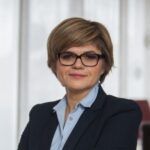

Business leader, with more than 30 years of international experience in leading functional departments and organizations, market development, developing strategies and leading business transformations in complex operational and multicultural systems.
Although she envisioned a career in STEM, after her master’s degree at the Faculty of Chemical Engineering and Technology, she built her career in global companies (Coca Cola, Avon, Tupperware, Herbalife Nutrition, Oriflame) through sales, marketing, supply chain, operations and general management, with full P&L responsibility.
She runs her own Advisura consulting practice, focused on business development, raising the competitiveness, efficiency and sustainability of small and medium-sized enterprises. She is particularly motivated by leader development, ESG integration, DEI Diversity, Equality, Inclusion (gender equality) and support for organizations in transition towards sustainable growth.
She represents renowned institutions in Croatia as Anchor-woman of the Cambridge Institute for Sustainable Leadership and as Chapter Lead of European Women on Boards.
Ms Šebečić Crnolatac offers the following key pieces of advice to future experts:
» Flexibility and continuous learning are essential for growth and advancement
» Engagement in foreign companies brings multiple benefits: working in a multicultural environment, improving communication skills, adopting innovative ways of working.
» Membership in numerous associations and volunteering offer broadening of horizons and gaining new experiences beyond conventional business channels.
» You should take advantage of every opportunity to connect and network, because with our knowledge and experience we are opening doors for new generations
Final thoughts by Ms Šebečić Crnolatac
֎ The Companies Act stipulates that 40% of non-executive directors or 33% of all directors of the underrepresented gender in management and supervisory boards of listed companies after June 30, 2026, but this is not only an important set of regulations and moral obligations, but research and good practices show that companies with gender-balanced management boards are 39 percent more likely to achieve above-average financial results. They are more innovative, sustainable and competitive!
֎ It turns out that women are the ones whose greater representation at the highest levels of decision-making in companies would benefit efforts for sustainable business. Why? Because women are, on average, more involved than men in sustainability-related jobs, and they occupy leading positions in sustainability and related sectors such as human resources and communications.
NATAŠA KOZLICA, M. Sc. Agr.
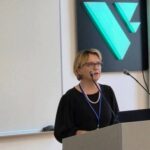
Ms Nataša Kozlica is a senior expert associate for the preparation and implementation of EU projects at the Regional Development Agency of Primorje-Gorski Kotar County, coordinator for Gorski Kotar and Head of the office in Delnice.
Before joining the Regional Development Agency of Primorje-Gorski Kotar County, she worked at the Veterinary Station of Delnice, and then as an advisor at the Local Development Agency PINS LLC Skrad on projects in entrepreneurship, the economy and tourism. She owns the craft “Borovnica” in Fužine, where she is involved in the cultivation and production of berries, as well as sales and service activities in agriculture.
She has extensive experience in EU projects, rural development, preparing development documents and strategies, organising education, conferences and events, and implementing STEM projects.
She is the Secretary of the Thematic Working Group “Women in Rural Areas” of the National Network for the Common Agricultural Policy at the Ministry of Agriculture, Forestry and Fisheries.
Several guidelines from Ms Kozlica’s extensive professional experience
Today, green technologies are crucial for sustainable food production, energy independence in rural communities, environmental protection, digitisation and innovation, as well as social and economic development through EU projects in rural areas.
Ms. Kozlica’s personal motivation for working in green technologies is the combination of technology and social responsibility and a long-term positive impact on the development of society.
Some of Ms. Kozlica’s most important projects include:
» Educational Mountain Garden
» Winter Edition of Radenska Mineral Water in 2024
» Smart Bike Delnice
» Gorski kotar 2030 (A green place with irresistible potential)
» School 5.0
Ms Kozlica is particularly proud of her role as secretary in the thematic working group “Women in Rural Areas”, established in November 2024. The group’s goals are to propose changes to the Strategic Plan of the Common Agricultural Policy 2023-2027 to recognise the role of women in rural development and agriculture, to encourage non-formal education, to carry out networking activities, and to empower women in rural areas to participate in public policy and entrepreneurship.
Ms Kozlica cites the rapid development of technology and market scepticism as specific obstacles in her professional development, which she overcame through continuous learning, support from mentors and family, and by finding concrete solutions for each individual challenge.
Ms Kozlica offers the following key pieces of advice to future experts:
» Use mistakes as opportunities for personal growth
» Admit that we do not have answers to all problems
» Continue improving your knowledge
» View the green technologies sector as an opportunity for growth and development
» Connect with other experts, as the demand for comprehensive knowledge is enormous
Final thoughts by Ms Kozlica
֎ Every beginning is difficult, with the first steps taken to get into the matter.
֎ Be curious.
֎ Do not be afraid of changes.
֎ Recognise your own economic values.
֎ Formalise your work whenever possible.
֎ Invest your time and money in knowledge and skills, especially technical ones.
֎ Consider networking and teamwork.
֎ Decide on your own boundaries, whether professional or personal.