VELERI STAKEHOLDERS' JOINT STATEMENTS
During the Career Talk and Workshop event held in February in Rijeka (GH Bonavia), four project ambassadors presented their career paths, and the obstacles and challenges they have faced. The event was an excellent opportunity to discuss possible improvements to the existing legislation, and several strong statements were made by the ambassadors and participating stakeholders.
Some of these include:

֎ Knowledge and solidarity build change.
֎ Collective actions transform individual experiences into structural demands for a more just system.
֎ Knowledge in itself is not neutral – the way we use and distribute it shapes the future
֎ No change happens in isolation – connection creates strength
֎ A green and fair Europe will not be created without gender-responsive public finances – and these are built by women who connect, know and act.
Project Ambassador, PhD Hana Paleka, City of Rijeka councillor
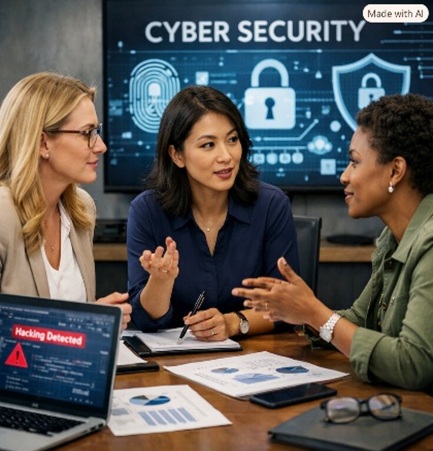
֎ Empower, connect and support women in the field of cybersecurity, promoting equality and diversity in the digital environment.
֎ Build an inclusive community that recognises and nurtures the talents of women at all stages of their careers, including development and lifelong learning through knowledge transfer.
֎ Collaborate with academia, the private sector, government and public institutions and organisations, other W4C chapters, and the W4C Foundation.
֎ Create opportunities for professional development and contribute to strengthening society’s resilience to cyber threats.
Project Ambassador, Marina Dimić Vugec, Cyber security expert
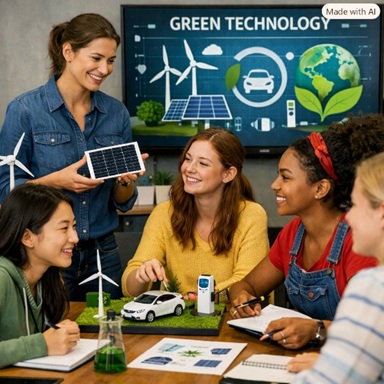
֎ Use mistakes as opportunities for personal growth
֎ View the green technologies’ sector as an opportunity for growth and development
֎ Connect with other experts, as the demand for comprehensive knowledge is enormous
Project Ambassador, Nataša Kozlica, M. Sc. Agr.
When discussing the major barriers and opportunities for young women entering green and deep technologies and STEM, stakeholders have made several important statements, the core ideas of which are presented in the table below.
MAJOR BARRIERS
MAJOR OPPORTUNITIES
Statistically and practically confirmed, there is a shortage of women in the (green tech) profession, with transparency in employment and promotion being a major problem
The implementation of EU strategies, policies, and programs promoting green technologies, STEM, and gender equality in these areas should be monitored both at the EU level and by individual Member States. The effectiveness of the programs must be measured regularly, and corrective measures should be taken as needed.
Primary education does not foster a culture of awareness among girls regarding career guidance.
In addition to scholarships in STEM and green technologies, it is necessary to co-finance associations that provide education in primary and secondary schools so that all students have equal rights to education.
Rural areas are particularly affected by a high level of ignorance of new technologies and a lack of financial resources to provide necessary training.
The expansion and establishment of new women’s alliances is encouraged, aiming to promote the visibility of women – entrepreneurs, scientists, and educators – who will strengthen the image of women in green technologies and STEM.
“We tend to adopt measures at the national and supranational levels that we know in advance will not be implemented.” (interview excerpt)
“When you empower children at home, they enter stronger into the society. A well-rounded whole in society is very important – change starts at home.” (interview excerpt)
“Women’s perceptions of their career paths are reflected in their children. If they think mothers are spending too much time on their jobs, it’s likely that girls will choose a different path.”, (interview excerpt)
“There should be a mentoring program and young people should be given experiences by more experienced mentors, not only good but also bad, so that they can prepare themselves for the negative things they might encounter in their careers. Communication between women is essential to share their experiences.” (interview excerpt)